


A club crest can look sharp on a flat sock and become difficult to read when stretched over a calf. A raised sole logo can look substantial yet feel uncomfortable inside a boot. For buyers ordering custom football socks, branding and grip should therefore be specified separately. This RONGTAO SPORT buying guide compares knitted logos, embroidery, transfers and silicone applications, with practical checks to complete before approving a bulk order.

Custom football socks: separate the logo from the grip
A logo identifies the team or brand. A grip pattern is intended to influence contact between the sock and another surface. One design may do both jobs, but approving its appearance does not establish its grip performance.
Location matters. An outer-sole application contacts the boot insole, while an inner application contacts the foot. Those are different interfaces. A cuff logo normally serves a visual purpose and should not be described as an anti-slip feature without relevant evidence.
Suppliers may use “silicone logo,” “grip printing” or “dotting” for different materials and application processes. Ask whether the proposal involves direct printing, dispensing or a separately applied transfer, and request the material identification. Elkem describes silicone systems for anti-slip textile applications, but that does not mean every raised sock print is silicone or has equivalent performance. Source: Elkem, anti-slip silicone coatings
Compare the main logo and grip methods
The table is a purchasing guide, not a ranking of guaranteed durability. The finished result depends on the sock construction, artwork and application conditions.
| Method | How it is made | Useful starting point | What to check on the sample |
|---|---|---|---|
| Jacquard knitted logo | Colored yarn forms the design within the knit | Simple team names, initials and repeated patterns | Small lettering, available yarn colors and distortion when worn |
| Embroidered logo | Thread is stitched into the finished fabric | A compact emblem where local thickness is acceptable | Backing, skin contact, puckering and restriction of stretch |
| Heat-transfer logo | A prepared decoration is bonded using heat and pressure | Artwork requiring detail that is difficult to knit | Fabric compatibility, edge adhesion, stretch recovery and dye migration |
| Direct silicone print | A silicone ink system is applied and cured on the fabric | A surface logo where the selected system suits the fabric | Cure, adhesion, print thickness and response to stretching |
| Sole grip print or dots | A specified compound forms a pattern on the sole | A grip-sock project with a defined contact surface | Pattern placement, adhesion, underfoot feel and behavior inside the intended footwear |
Knitted logos versus embroidery
Jacquard uses yarn to create the image within the sock structure. That makes it a different construction from decoration applied afterward. Sock knitting machinery supports programmed patterns, but the available detail and colors depend on the equipment and sock design. Source: Lonati knitting-machine documentation
For a small crest, request a sample at the actual production size. A simplified emblem may read more clearly than the complete artwork. For embroidery, examine the reverse side as closely as the front: backing and stitching sit against a garment that stretches and may contact skin.
Transfers versus direct silicone printing
A transfer may suit detailed artwork, but “heat transfer” is not one universal material. Ask the supplier to identify the chosen product and confirm its compatibility with the sock fabric. Application temperature, time and pressure should follow that system’s instructions, not a generic recipe. STAHLS specifically advises matching the transfer to the garment and testing the application settings. Source: STAHLS application guidance
Direct silicone printing is also formulation-dependent. Avient describes silicone inks developed for stretch and feel on performance fabrics. That supports considering a suitable silicone system; it does not establish that an unspecified sock print will resist every wash or retain adhesion indefinitely. Source: Avient silicone ink overview
Specify grip dotting beyond its appearance
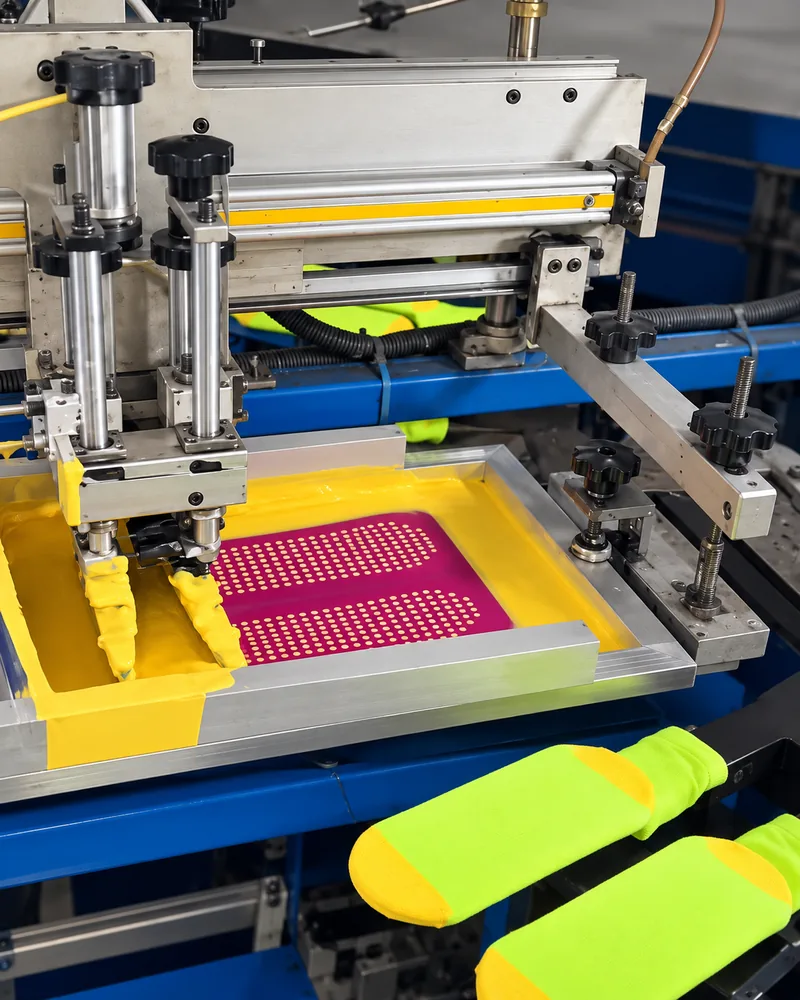
For custom grip football socks, send a sole layout with the areas to cover, approximate dimensions and whether the application sits inside or outside the sock. Identify the intended boot or insole where possible. A photo alone rarely defines the job well enough for comparable quotations.
Pattern and thickness
More coverage is not automatically a better purchasing decision. Compare how candidate patterns feel underfoot and whether they interfere with normal fabric movement. Treat dot height, spacing and coverage as variables to evaluate together, rather than asking for the thickest possible print.
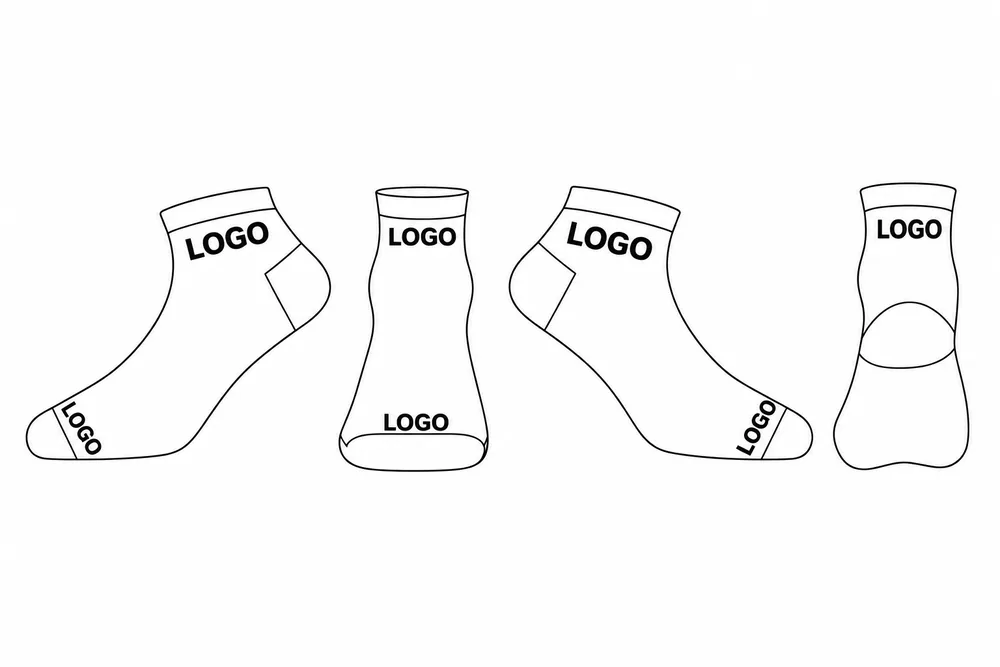
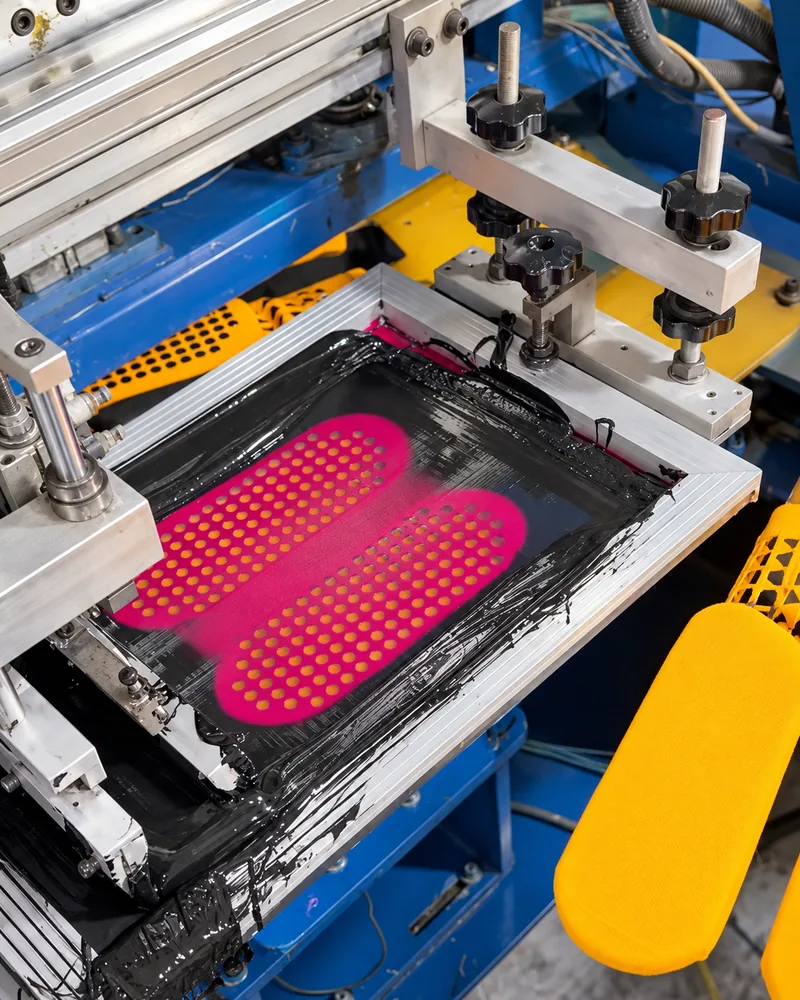
If the sole logo is also the grip pattern, request two approvals: visual approval of the brand mark and a separate assessment of the contact behavior. Do not accept a visually identical substitute compound without reviewing the revised sample.
Material and application control
Record the compound or ink reference, color and application method in the approved specification. Ask the production partner to document relevant application and curing conditions. Changes to the sock fabric or finishing process should trigger a sample review rather than an assumption that the previous settings still work.
For dyed polyester components, include a color-transfer check. Avient’s performance-wear guidance identifies dye migration as an issue affected by the fabric and printing conditions. A white logo should be assessed after processing and during the agreed evaluation period, not just immediately after application. Source: Avient performance-wear printing guidance
Approve samples with a repeatable checklist
Use the same sock construction and artwork for the options being compared. Otherwise, a change in yarn, fit or sole cushioning may be mistaken for a difference in decoration quality.
- Appearance: inspect logo dimensions, position, color and legibility both relaxed and worn.
- Stretch and recovery: stretch the relevant area to a realistic wearing condition, release it and look for lifting, distortion or visible damage.
- Wear assessment: use the intended size and footwear; record pressure spots, movement and wearer feedback.
- Wash evaluation: agree on detergent, temperature, drying method and number of cycles before comparing samples.
- Approval record: retain a signed sample, photographs and the agreed specification for the production partner.
These are buyer evaluation steps, not a substitute for a defined laboratory method. A hand-stretch demonstration does not prove service life, and a wear trial does not justify an injury-prevention claim. If a measurable grip or durability claim is required, agree on the test method, conditions and acceptance criteria before ordering.
Compare quotations using the same specification
The lowest unit price is difficult to interpret if one quote includes a knitted crest and another includes a transferred logo plus sole printing. Request separate lines for the sock body, logo application, sole grip, setup, samples and packaging.
Include the artwork file, size range, quantity by color, logo placement, proposed grip layout and destination. Ask which changes affect setup cost or minimum order quantity. Keep sample timing, production lead time and transport estimates separate.
For a RONGTAO SPORT inquiry, share these requirements so the proposed options can be reviewed with manufacturing partners. Available methods, pricing, sample arrangements and lead times need confirmation for the specific project. Selecting custom football socks starts with agreeing on the specification—not choosing a process name from a photo.
Frequently asked questions
Q1. What is the best logo method for custom football socks?
There is no single best method. Consider jacquard for a simple knitted design, or evaluate a suitable transfer when fine artwork is important. Embroidery and direct silicone printing require their own comfort and compatibility checks. Approve the actual-size sample while the sock is stretched as worn.
Q2. Is a silicone logo the same as anti-slip grip dotting?
No. A silicone logo describes a material and branding application; grip dotting describes a patterned contact feature. Location, formulation and finished performance must be specified separately. A raised appearance alone is not evidence of grip.
Q3. Can custom grip football socks combine a knitted logo and sole printing?
They can be specified as a combination, subject to the production partner confirming feasibility. Ask for a complete sample rather than approving the knitted logo and sole pattern on unrelated fabrics.
Q4. Which football sock logo method lasts longest after washing?
That cannot be determined from the method name alone. Compare finished samples using the same agreed washing and drying conditions. Do not apply a durability statement from an ink supplier to a finished sock without relevant evidence.
Q5. What should I send for a custom football socks quotation?
Send artwork, placement dimensions, size and color quantities, fabric requirements, grip layout, packaging needs, destination and target timing. Request confirmation of feasible methods, sample terms and minimum quantities before finalizing the order.